Why Do So Many Curlew Chicks Die? Insights from Telemetry Research with the Michael Otto Institute at NABU
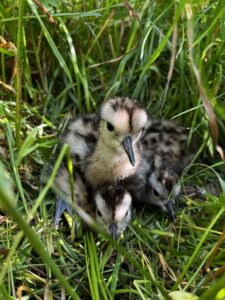
The curlew is one of the most endangered meadow-nesting birds in Central Europe. Its population has been declining dramatically for years, primarily because too few chicks survive to adulthood.
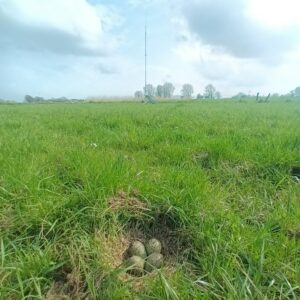
Measures such as protecting nests from agricultural disturbances and using electric fences against predators have shown success in terms of hatching, but that often does not solve the problem:
Why do so many chicks continue to die despite successful hatching?
Unraveling the mystery: The long-term telemetry project in northern Germany
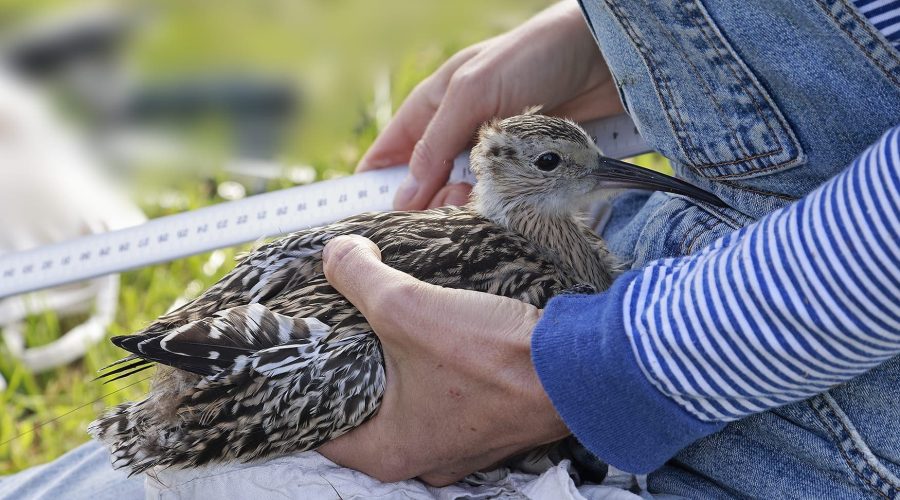
To evaluate various conservation measures and understand the causes of low reproductive success, the Michael Otto Institute at NABU conducted a research project in the Eider-Treene-Sorge lowlands in 2024 and 2025. As part of this project, a total of 65 curlew chicks were fitted with transmitters to track their fate continuously.
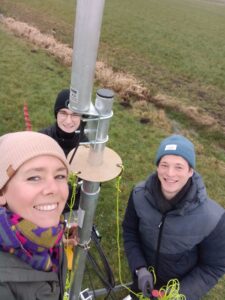
Automatic radio telemetry using our vhf:tracker made it possible to track the birds from hatching until they fledged or until their premature death. Thanks to data points recorded every second on their movements and behavior, their first flight attempts could be monitored in real time from home, down to the minute. Unfortunately, however, this method was all too often used to determine the exact time of death and the cause of death.
Systems such as the vhf:tracker make it possible to automate tracking and significantly reduce the time required:
– Continuous data collection: The movements and positions of tagged animals are recorded continuously. This makes it possible, for example, to pinpoint the exact timing of initial flight movements, the absence of further activity, or possible times of death.
– Reduced impact of human presence: The stationary receiving units track the animals without requiring repeated human presence in the study area.
– Targeted field checks: Current position and reception data can be viewed remotely. This allows for more targeted field checks and searches for missing or deceased animals.
– Detailed data set: The combination of high temporal resolution and location data makes it possible to track the spatial use, developmental history, and loss events of individual animals and to evaluate conservation measures based on this information.
The Results
The findings paint a sobering picture:
– 35% of the chicks were preyed upon by carnivorous mammals (such as foxes).
– 18% fell victim to birds of prey.
– Another chick died in a drainage ditch.
– Only 12% of the tagged chicks survived until they fledged (depending on the study area and year, the probability of survival ranged from just 0% to 27%).
For about 60% of the birds, the cause of death could be clearly determined through precise monitoring. However, the telemetry stations also provided crucial clues regarding the remaining losses: Since 63% of these chicks disappeared during the night or at dusk, it stands to reason that nocturnal carnivores were primarily responsible in these cases as well.
Working Together for Evidence-Based Species Conservation
Behind these data lies extensive fieldwork that also involves challenging situations. Natalie Busch and Helgard Lembke carried out and oversaw the project at the Michael Otto Institute at NABU, closely monitoring the development of the tagged chicks over a two-year period—including numerous early losses. This work deserves great respect.
It provides important insights into when and under what circumstances young birds are lost, thereby creating a better foundation for the targeted development of conservation measures for the curlew.
If you would like more information about the project, please visit the Michael-Otto-Institut’s website. The telemetry report will also be published there shortly.
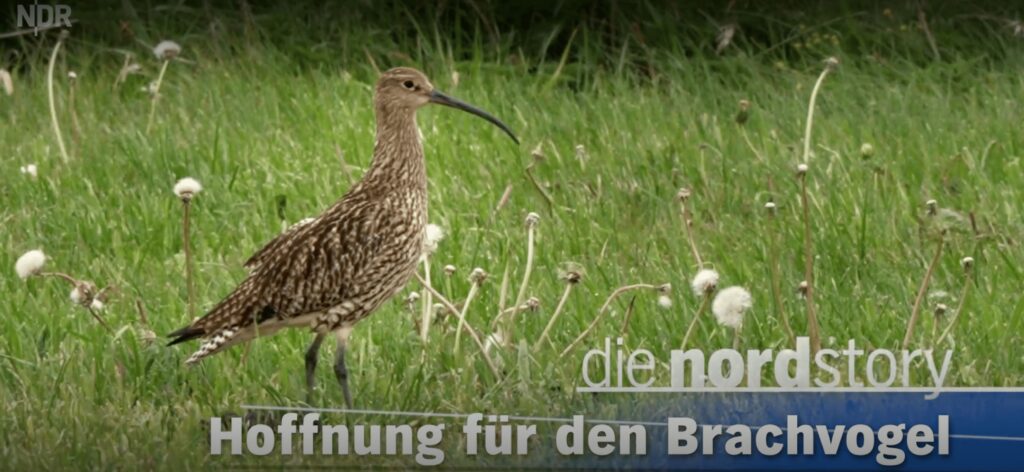
The Project on TV: NDR Documentary “die nordstory”
Would you like to see for yourself what the researchers are doing in the field? The NDR documentary “die nordstory: Hope for the Curlew – A Farmer and a Biologist on a Rescue Mission” shows how nature conservation and agriculture work hand in hand in the Eider-Treene-Sorge lowlands. The program follows the team into the field and provides compelling insights into the challenges of protecting meadow-nesting birds. Watch it now on YouTube.
Would you like to receive our newsletter once a month? In it, you’ll get a glimpse into our “Project of the Month,” learn about new products, and discover tips and updates. You can sign up for the newsletter here.